
Sharing Layers of Practice
Sharing Layers of Practice
What we learned from our Integration Challenge collaboration
This year we, the Irene Taylor Trust (ITT) and Hear Me Out (HMO), took part in an Integration Challenge collaboration. Although our organisations have been connected for many years, this was the first time we were able to look closely at each other’s frontline music practice. ITT works in prisons and HMO works in immigration detention and asylum settings. Our contexts are very different, yet the values behind our work are closely aligned.
This project gave us the chance to step into each other’s spaces, learn from one another and reflect more deeply on our own approaches. We are sharing our learning here in the hope that it might inspire other organisations who are thinking about collaborating.
What the collaboration made possible:
Artists learning from artists
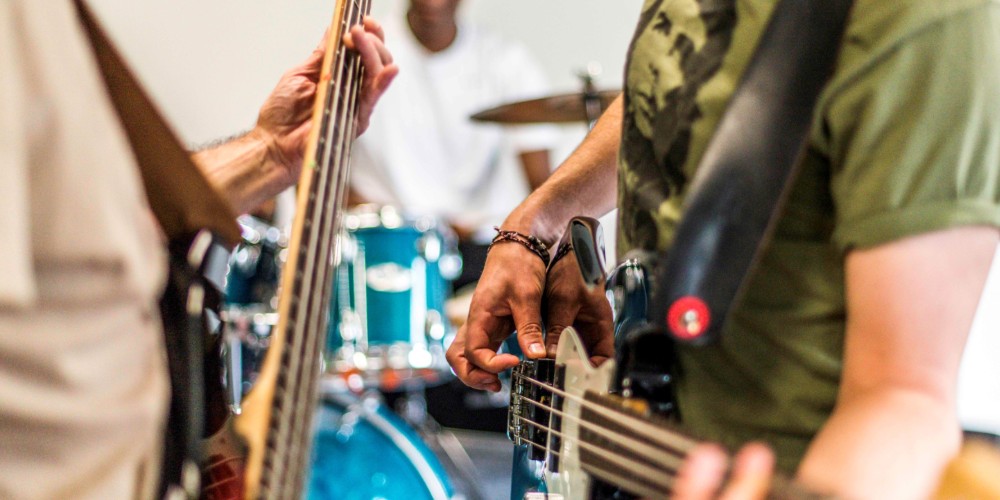
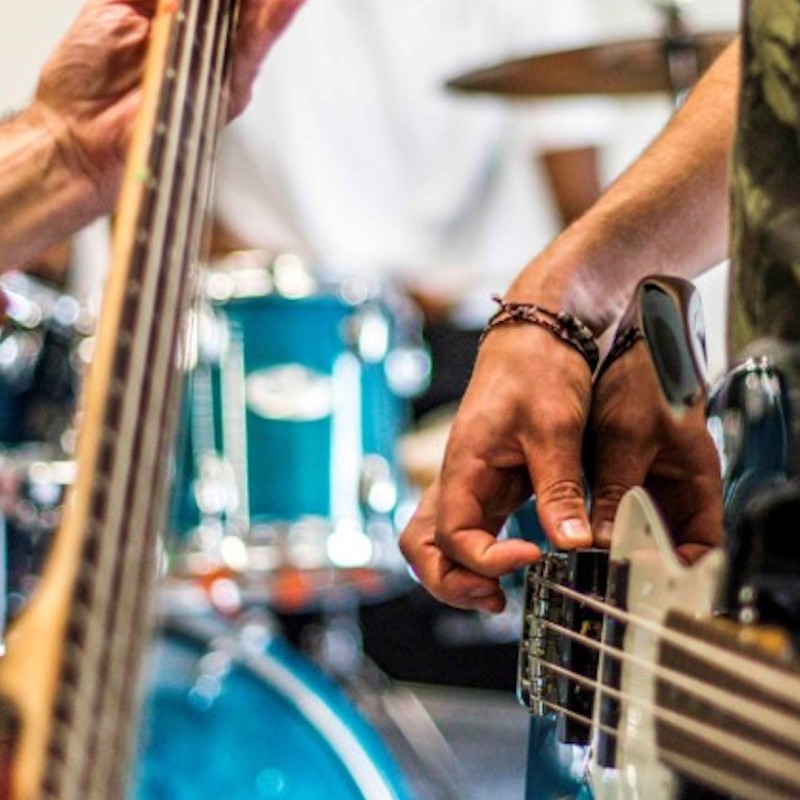
Our artists observed each other’s workshops and took time to reflect together. They recognised many shared experiences, particularly the need to work flexibly and respond in the moment. They also noticed key differences in how our sessions run. ITT often works with groups that stay together over time, which allows for song writing and one to one musical development. HMO sessions are shaped by more unpredictable attendance, which leads to more open music making and jamming. Seeing these contrasts helped all of us understand our own work more clearly and also identified other ways we could work in our own groups.
Participants influencing future practice
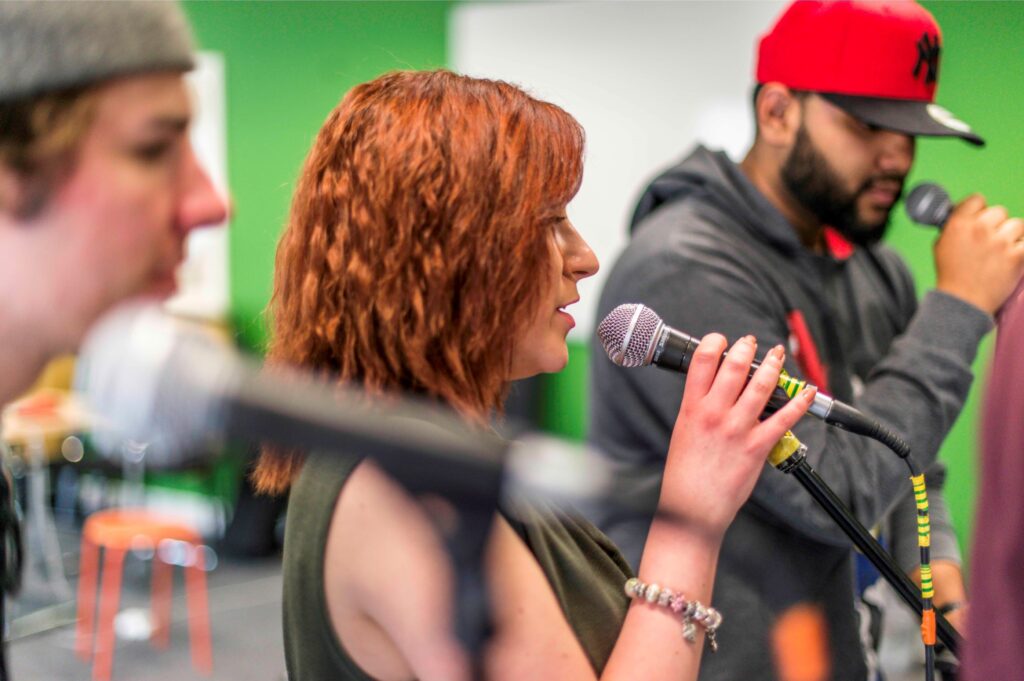
We invited participants in both settings to share what mattered to them. In Napier Barracks, language barriers made it difficult to gather detailed insights, which is something we will plan for more carefully in future. Even with this challenge, participants spoke about how music increased confidence, created relaxation and offered moments of joy. In ITT’s Sounding Out project, participants talked about collaboration, creative freedom and the pride of making something from scratch. Their feedback reminded us how important it is to create spaces where people can express themselves freely, have agency over their current situations and build resilience for their futures.
Sharing learning with the wider sector
We hosted a webinar for artists, educators, students and colleagues from across the sector. Many attendees told us the session encouraged them to reflect more intentionally on their own practice. Others said it helped them understand the realities of music making in prisons and detention. There was a strong interest in artist wellbeing and in the importance of reflective time, which is often overlooked.
What stood out for us:
Shared reflective practice is powerful
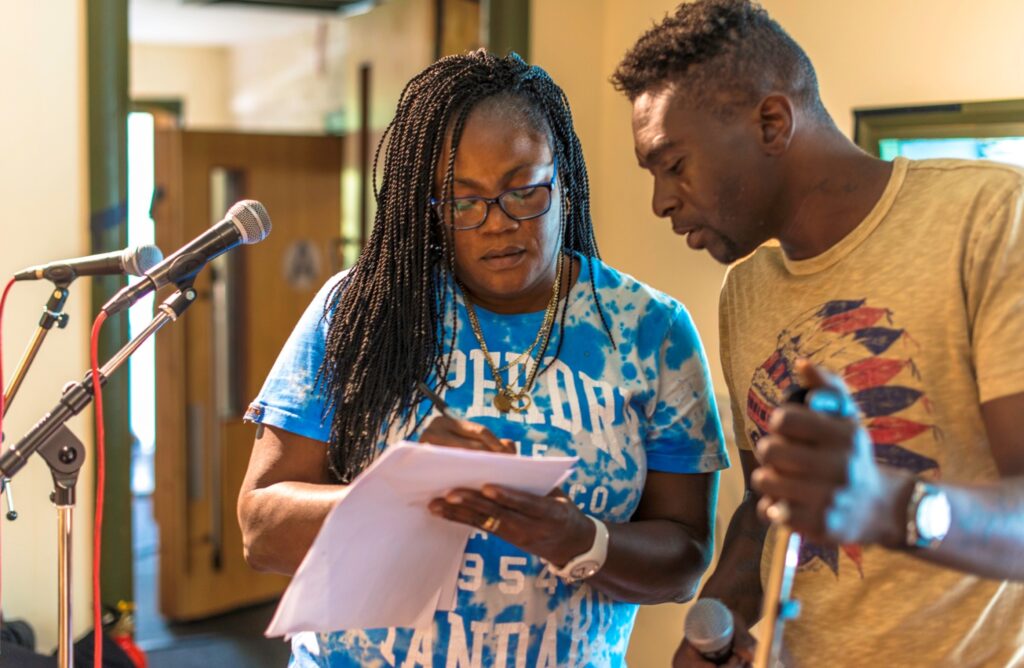
The project reinforced how important it is for artists to have time and space to think about their work, and to talk openly and share the challenges they face. It benefited us as individuals and strengthened our two organisations.
Language needs careful planning
In detention settings, language can be a barrier to collecting meaningful feedback. We will build better tools, prompts and interpreter support into future projects.
Face to face contact makes a difference
Much of this collaboration happened in person. Being physically present in each other’s spaces led to deeper conversations and stronger relationships.
Artist care must be resourced
Artists rarely have paid time to reflect. In this project they did, and they told us how valuable and restorative it felt. We want to find ways to build more of this into our ongoing practice to strengthen our respective sectors and ensure the vast knowledge our artists have is not lost as a result of burn out.
What we hope happens next
This project gave us a simple but effective model for shared reflective practice, and we would like to explore ways to develop it further. With the right support, it could become something that other organisations use to learn from each other. We also hope to build more structured reflection time into our own programmes and to support artists to develop their reflective skills.
For any organisation thinking of applying for an Integration Challenge collaboration, our experience is that even a small project can create deep learning, build stronger relationships and shape practice in lasting ways.
Sharing Layers of Practice
What we learned from our Integration Challenge collaboration
This year we, the Irene Taylor Trust (ITT) and Hear Me Out (HMO), took part in an Integration Challenge collaboration. Although our organisations have been connected for many years, this was the first time we were able to look closely at each other’s frontline music practice. ITT works in prisons and HMO works in immigration detention and asylum settings. Our contexts are very different, yet the values behind our work are closely aligned.
This project gave us the chance to step into each other’s spaces, learn from one another and reflect more deeply on our own approaches. We are sharing our learning here in the hope that it might inspire other organisations who are thinking about collaborating.
What the collaboration made possible:
Artists learning from artists
Our artists observed each other’s workshops and took time to reflect together. They recognised many shared experiences, particularly the need to work flexibly and respond in the moment. They also noticed key differences in how our sessions run. ITT often works with groups that stay together over time, which allows for song writing and one to one musical development. HMO sessions are shaped by more unpredictable attendance, which leads to more open music making and jamming. Seeing these contrasts helped all of us understand our own work more clearly and also identified other ways we could work in our own groups.
Participants influencing future practice
We invited participants in both settings to share what mattered to them. In Napier Barracks, language barriers made it difficult to gather detailed insights, which is something we will plan for more carefully in future. Even with this challenge, participants spoke about how music increased confidence, created relaxation and offered moments of joy. In ITT’s Sounding Out project, participants talked about collaboration, creative freedom and the pride of making something from scratch. Their feedback reminded us how important it is to create spaces where people can express themselves freely, have agency over their current situations and build resilience for their futures.
Sharing learning with the wider sector
We hosted a webinar for artists, educators, students and colleagues from across the sector. Many attendees told us the session encouraged them to reflect more intentionally on their own practice. Others said it helped them understand the realities of music making in prisons and detention. There was a strong interest in artist wellbeing and in the importance of reflective time, which is often overlooked.
What stood out for us:
Shared reflective practice is powerful
The project reinforced how important it is for artists to have time and space to think about their work, and to talk openly and share the challenges they face. It benefited us as individuals and strengthened our two organisations.
Language needs careful planning
In detention settings, language can be a barrier to collecting meaningful feedback. We will build better tools, prompts and interpreter support into future projects.
Face to face contact makes a difference
Much of this collaboration happened in person. Being physically present in each other’s spaces led to deeper conversations and stronger relationships.
Artist care must be resourced
Artists rarely have paid time to reflect. In this project they did, and they told us how valuable and restorative it felt. We want to find ways to build more of this into our ongoing practice to strengthen our respective sectors and ensure the vast knowledge our artists have is not lost as a result of burn out.
What we hope happens next
This project gave us a simple but effective model for shared reflective practice, and we would like to explore ways to develop it further. With the right support, it could become something that other organisations use to learn from each other. We also hope to build more structured reflection time into our own programmes and to support artists to develop their reflective skills.
For any organisation thinking of applying for an Integration Challenge collaboration, our experience is that even a small project can create deep learning, build stronger relationships and shape practice in lasting ways.
Latest News
We’re delighted to share that our founder, Ben Holden, has been appointed Chair-elect of Libraries Connected. In this piece, Ben

Educational inequality is not abstract for Baraka Community Association and Earls Court Youth Club (ECYC). It shows up daily in
We are beyond proud to publish our official Lightbulb Impact Report for 2024-2025, thanks to the incredible efforts of Luisa
Salary: £160 per day Hours: 3 days per week (flexible hours, with the possibility of increasing the number of days
