
Bringing North and South Together: Lessons from the Baraka x ECYC Partnership
Bringing North and South Together: Lessons from the Baraka x ECYC Partnership
Educational inequality is not abstract for Baraka Community Association and Earls Court Youth Club (ECYC). It shows up daily in young people with potential but limited access to consistent support. While both organisations were already working to address this, support often operated in parallel rather than in sync.
Through its Integration Challenge, the Lightbulb Trust funded a small pilot grant to bring the two organisations together to test new ideas and ways of working. The aim is to create space for organisations to explore solutions collaboratively, rather than in isolation.
Baraka brought a structured supplementary education model, developed over five years, combining academic support with data tracking and personalised learning. ECYC brought nearly 50 years of youth club experience, trusted relationships, strong attendance, and a space where young people feel they belong.

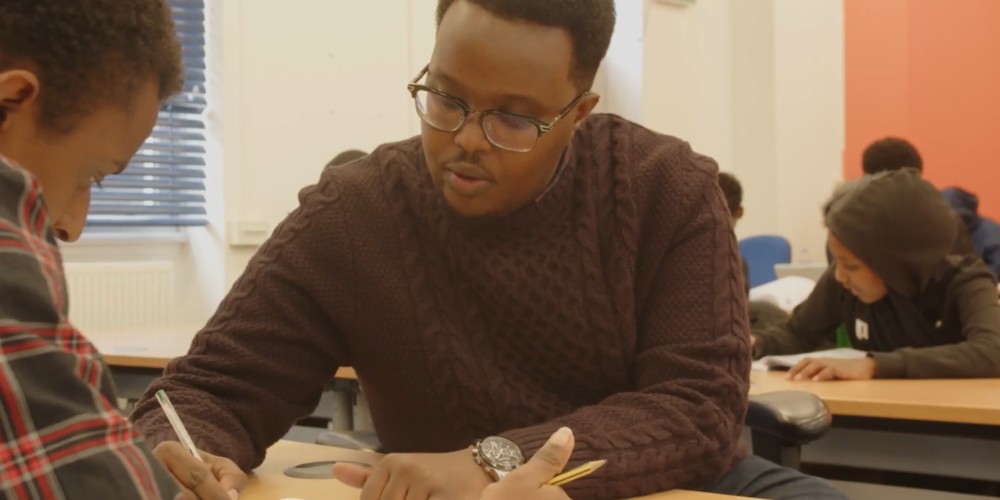
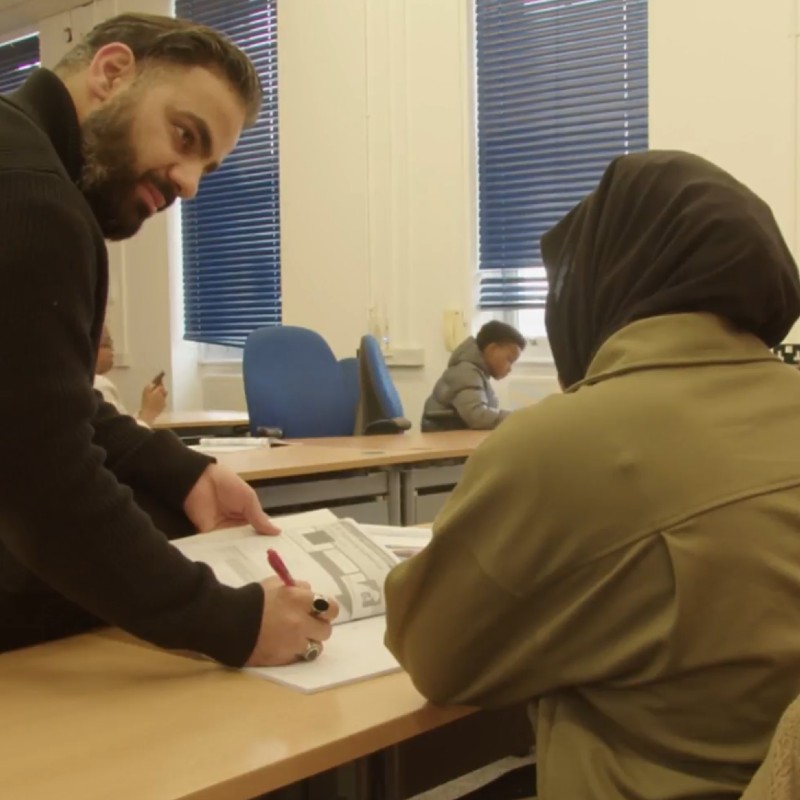
Rather than replacing existing provision, the partnership focused on integration. Baraka’s model was introduced through training, adapted through co-delivery, and gradually embedded into ECYC’s setting. Young people could access more consistent academic support in an environment they already trusted, reducing barriers to participation and strengthening continuity in learning.
What started as a pilot has now grown into a cross-borough programme across Kensington and Chelsea, with the potential to reach more young people and deliver more sustained outcomes.
Key learnings:
1 – Alignment matters as much as provision
Both organisations were already supporting young people before this work began. The challenge was not the absence of provision, but the way it operated separately. Each brought different strengths, in structure, relationships, and delivery, but these were not previously connected. By aligning these strengths more intentionally, the overall offer became more consistent and effective. This raises a broader question for the sector: how many perceived gaps are actually gaps in coordination rather than provision?
2 – Partnership can strengthen practice without diluting purpose
Collaboration did not require either organisation to compromise its identity. Baraka remained focused on structured, data-informed academic support, while ECYC continued to provide a trusted, community-rooted environment. The value came from holding onto these distinct strengths and allowing something additional to develop between them. The result was a more rounded offer that neither could have delivered alone.
3 – Ownership drives sustainability
The shift from supported delivery to independent ownership was critical. Early stages of the partnership relied on shared delivery and guidance, but long-term value came when ECYC was able to embed and deliver the model itself. Building that ownership required time, space to adapt, and confidence through practice. Sustainable impact depends not on how well a model performs with external support, but on how confidently it can be delivered without it.
4 – Strong models can travel
A key insight from this work is that a well-developed model can extend beyond its original context. Baraka’s approach, built in the north of the borough, was able to take root within a different organisation and community in the south. This was not a simple replication but a process of adaptation and learning. It suggests that scaling impact may depend as much on transferring effective models as it does on growing individual organisations.
5 – Innovation is about how we work, not just what we deliver
In this case, innovation was not about creating a completely new programme. It was about how organisations worked together: sharing knowledge, testing approaches in practice, adapting in real time, and building something jointly over time. Many funding models focus on predefined outputs, but this kind of collaboration requires flexibility and space for iteration. If the goal is to unlock more effective, joined-up solutions, then funding needs to support not just programmes but also the process of developing them.
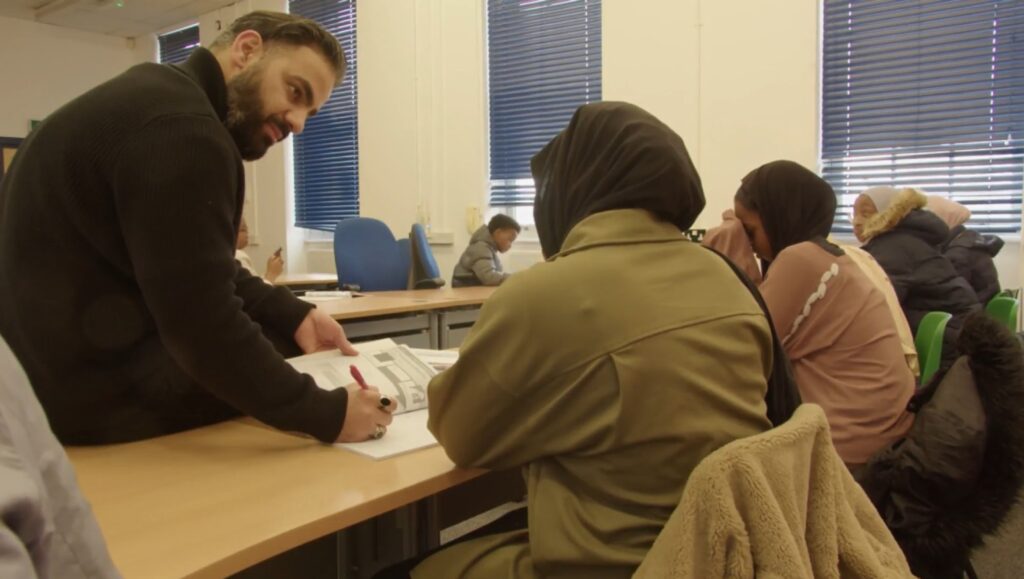
Ultimately, this partnership showed the value of alignment. By connecting structured learning with trusted relationships and strong community presence, it reduced fragmentation and created a more joined-up approach to supporting young people. It also demonstrated what can happen when organisations are given the space to work differently, with collaboration at the centre rather than the margins.
Written by Ahmed Nur, Director of Baraka Community Association, and Abdi Aden, Centre Manager at Earl’s Court Youth Club.
Bringing North and South Together: Lessons from the Baraka x ECYC Partnership
Educational inequality is not abstract for Baraka Community Association and Earls Court Youth Club (ECYC). It shows up daily in young people with potential but limited access to consistent support. While both organisations were already working to address this, support often operated in parallel rather than in sync.
Through its Integration Challenge, the Lightbulb Trust funded a small pilot grant to bring the two organisations together to test new ideas and ways of working. The aim is to create space for organisations to explore solutions collaboratively, rather than in isolation.
Baraka brought a structured supplementary education model, developed over five years, combining academic support with data tracking and personalised learning. ECYC brought nearly 50 years of youth club experience, trusted relationships, strong attendance, and a space where young people feel they belong.
Rather than replacing existing provision, the partnership focused on integration. Baraka’s model was introduced through training, adapted through co-delivery, and gradually embedded into ECYC’s setting. Young people could access more consistent academic support in an environment they already trusted, reducing barriers to participation and strengthening continuity in learning.
What started as a pilot has now grown into a cross-borough programme across Kensington and Chelsea, with the potential to reach more young people and deliver more sustained outcomes.
Key learnings:
1 – Alignment matters as much as provision
Both organisations were already supporting young people before this work began. The challenge was not the absence of provision, but the way it operated separately. Each brought different strengths, in structure, relationships, and delivery, but these were not previously connected. By aligning these strengths more intentionally, the overall offer became more consistent and effective. This raises a broader question for the sector: how many perceived gaps are actually gaps in coordination rather than provision?
2 – Partnership can strengthen practice without diluting purpose
Collaboration did not require either organisation to compromise its identity. Baraka remained focused on structured, data-informed academic support, while ECYC continued to provide a trusted, community-rooted environment. The value came from holding onto these distinct strengths and allowing something additional to develop between them. The result was a more rounded offer that neither could have delivered alone.
3 – Ownership drives sustainability
The shift from supported delivery to independent ownership was critical. Early stages of the partnership relied on shared delivery and guidance, but long-term value came when ECYC was able to embed and deliver the model itself. Building that ownership required time, space to adapt, and confidence through practice. Sustainable impact depends not on how well a model performs with external support, but on how confidently it can be delivered without it.
4 – Strong models can travel
A key insight from this work is that a well-developed model can extend beyond its original context. Baraka’s approach, built in the north of the borough, was able to take root within a different organisation and community in the south. This was not a simple replication but a process of adaptation and learning. It suggests that scaling impact may depend as much on transferring effective models as it does on growing individual organisations.
5 – Innovation is about how we work, not just what we deliver
In this case, innovation was not about creating a completely new programme. It was about how organisations worked together: sharing knowledge, testing approaches in practice, adapting in real time, and building something jointly over time. Many funding models focus on predefined outputs, but this kind of collaboration requires flexibility and space for iteration. If the goal is to unlock more effective, joined-up solutions, then funding needs to support not just programmes but also the process of developing them.
Ultimately, this partnership showed the value of alignment. By connecting structured learning with trusted relationships and strong community presence, it reduced fragmentation and created a more joined-up approach to supporting young people. It also demonstrated what can happen when organisations are given the space to work differently, with collaboration at the centre rather than the margins.
Written by Ahmed Nur, Director of Baraka Community Association, and Abdi Aden, Centre Manager at Earl’s Court Youth Club.
Latest News
We’re delighted to share that our founder, Ben Holden, has been appointed Chair-elect of Libraries Connected. In this piece, Ben

We are beyond proud to publish our official Lightbulb Impact Report for 2024-2025, thanks to the incredible efforts of Luisa
What we learned from our Integration Challenge collaboration This year we, the Irene Taylor Trust (ITT) and Hear Me Out
Salary: £160 per day Hours: 3 days per week (flexible hours, with the possibility of increasing the number of days
