• Skip to main content
  • Skip to footer

Lightbulb Trust

Changing lives for the better

  • About
  • Charity Partners
  • Impact Investing
  • Our Impact
  • Greenlight Project
  • Blog

Uncategorized

What Five Years as a Funder Has Taught Me

21 October, 2025 by Luisa Gockel

This year marks five years since I joined the Lightbulb Trust. We are a small grant-making foundation and impact investor, but we have never let size limit our ambition.

Looking back, I have had the privilege of sitting across from remarkable founders, charity leaders, activists and policy thinkers. Each one has shaped how I understand power, purpose, and the messy, human way that change really happens.

Here are ten lessons I keep coming back to, my own unofficial guide to funding a little better.

1. Change needs roots…

We’re a place-based funder with a focus on West London. Our work is grounded in long-term relationships, deep listening, and the belief that proximity leads to better decisions. We believe in local interventions because we see the difference they make, up close and every day. A trusted adult in a school, a warm meal at a community hub, a creative outlet after school. These are the kinds of initiatives that bring stability and hope, especially where the system has failed repeatedly. 

2. …but it also needs rockets

No matter how brilliant a local intervention is, it can only go so far if the system that creates the need for it remains unchanged. That’s why we also make impact investments, backing early-stage, tech-based startups that have the potential to reshape systems in education, mental health and employment. The real magic happens when these two strands meet: when the deep understanding and trust built on the ground connect with the reach and momentum of system-focused ventures. I believe that’s where lasting change begins.

3. Proximity is power

The most transformative ideas come from leaders who are closest to the problem, people rooted in the communities they serve. But proximity should not stop there. As a small funder, staying close to those leaders matters just as much. You learn more from a quick text or call than from a long application form. All 50 of our active partners have my personal number and know they can reach me if they need to. It is not a model for everyone, but for me, that closeness builds trust and understanding.

4. Are you really a proactive funder?

For some funders, invitation-only can feel not inclusive enough, which is why many prefer to call their approach proactive. For us, being truly proactive means putting in the hours of research needed to find the right partners, rather than waiting for them to find us.

Having been a fundraiser myself, I feel strongly about this. We only invite those we already believe are a strong fit, so before they sit down to write a single line of their application, they know their time is valued, and that their chances of being funded are very high. Some funders boast about receiving hundreds of applications with a 10% success rate. To me, that’s a failure of design. There are many ways to fix it, such as offering open office hours for eligibility questions or clearly stating success rates. Small changes like these make funding more transparent and humane.

5. Our charity leaders are burning out

I’ve lost count of how many brilliant leaders have told me they feel exhausted, alone, or one funding cycle away from quitting. Before asking for another quarterly report or impact matrix, ask when they last took a proper break. Their wellbeing is the work, especially in small charities, where one person often holds everything together.

6. Keep an eye on your female leaders

Too many women in leadership roles carry the weight quietly. Structural sexism and racism often mean they feel they can’t show vulnerability or ask for help. It’s not uncommon for a charity leader to break down in tears when we start talking about funding or some of the challenges they face. They hold so much for others, often with little space or support for themselves. If they’ve been quiet for too long, check in.

7. A seat at the table

If funders want diverse and representative leaders and teams, they need to be part of decision-making too, including on your board. We recently began the process of seeking Charity Commission permission to pay our trustees, prompted by conversations with brilliant candidates who bring both lived and professional experience. Again and again, we heard the same thing: I can’t afford to do this unpaid. The system makes it hard to change who gets a seat at the table, and it shows. According to the Charity Commission’s own findings, trustees still don’t reflect the communities charities serve, with most being older, white and highly educated.

8. If you want better data, build it together

Metrics should help your partners learn and improve, not just justify their work to you. The best learning comes from honest conversations, but if something about a partner’s approach to measurement isn’t working, find ways to support them to build that capacity. Many small charities don’t have dedicated monitoring & evaluation teams, so we offer pro bono support and connect partners with an impact measurement expert who helps them strengthen their approach and tell their story with more confidence. A little help can make a big difference. 

9. Fund the innovation you ask for

Funders love to say they want charity partners to be innovative, but then forget to actually fund it. If you want people to experiment, you need to give them the financial room to try, test and even fail. Build it on top of your core grant, not instead of it. We run an ongoing fund for exactly this. It gives our partners the permission and incentive to take risks that could lead to something better. Funders should stop saying they want innovation until they are ready to pay for it.

10. The value of ‘learning out loud’ 

One thing I’m still learning: don’t wait until you feel completely ready before sharing what you know. There’s a lot of value in learning out loud and sharing what we’re unsure about, what’s working, and what isn’t. It creates space for connection and reminds others they don’t need to have it all figured out either. We’re all learning, all the time.

What ties it all together

I love trust-based philanthropy, but I believe that should be the baseline, not the end goal. Trust is where we start, not where we stop. The real work is to make philanthropy human-centred. We need to see the people behind the proposals, to listen before measuring, and to recognise that care and connection are not extras, but essentials for lasting impact.

Luisa Gockel, Director at the Lightbulb Trust

Filed Under: Uncategorized

Launching the UK’s First Workertech Impact Investment Fund

21 October, 2025 by Luisa Gockel

15 September 2025 by Louise Marston

Building on five years of proven impact, we’re launching the UK’s first dedicated investment fund for technology that improves low-paid work

We’re really proud to be announcing the first close of the UK’s first Workertech impact investment fund today—a £9m fund to support innovation and technology improving work for those in low pay.

The Ventures activities of the Resolution Foundation were set up to address some key issues affecting work:

  • Good work is vital to living standards – it affects our financial position, but also mental and physical health
  • Access to widespread good work requires more than policy change – as important as that is. It needs people and employers to change and be supported to do things differently.
  • Those using technology to transform work and employment tend to focus on higher-paid jobs, desk-based and knowledge work, and benefits to employers, often neglecting the bottom half of earners and the impact on workers.
  • The nature of startups and early-stage investments means that there are well-known biases in who gets to found companies and who gets to invest in them.

We wanted to create a fund that prioritised positive social impact, that welcomed founders from all backgrounds, and that could seek out great ideas that could benefit workers as well as having a strong business model.

Proven impact at scale

Over the last five years, we’ve demonstrated that this approach works. Our portfolio of Workertech investments has reached over 358,000 workers, with more than 20,000 actively using our portfolio companies’ services to improve their working lives. Most importantly, over 5,600 workers have experienced transformational changes in their pay, prospects, power, or wellbeing—proving that purpose-driven technology can create meaningful change.

Our first portfolio exit last year—Breakroom’s acquisition by U.S. platform ZipRecruiter—showed that worker-focused ventures can build sustainable businesses while creating lasting social impact.

Our focus is clear:

We invest in companies that use technology and data to enhance working lives across four key areas:

Better Pay: Supporting innovations that increase income through job moves, promotions, successful campaigns for higher wages, or offer higher pay standards compared to industry practices.

Improved Prospects: Backing platforms that help workers complete training, acquire new skills, secure work in sectors with better progression opportunities, or access more secure working hours.

Greater Power: Investing in solutions that improve workers’ ability to take individual or collective action, create channels for worker voice, and help secure positive changes from employers or policy makers.

Enhanced Wellbeing: Supporting technologies that offer better working conditions, provide support for excluded or disadvantaged groups, and reduce negative impacts on physical and mental health.

We know that these ventures exist, and are excited to bring our existing portfolio into the new fund. You can find out more about them and the impact they’ve created to date in our most recent impact report.

Building an inclusive ecosystem

We’re proud that 50% of our portfolio founders are women and 25% are from BAME backgrounds—demonstrating our commitment to supporting diverse entrepreneurs who understand the challenges facing low-paid workers. Through pre-investment grants, mentoring, and flexible funding structures (including quasi-equity for cooperatives and social enterprises), we’re creating pathways for those with lived experience of these issues to lead solutions.

A coalition for change

This fund represents more than capital—it’s backed by a leading coalition of mission-aligned investors including Resolution Trust, Joseph Rowntree Foundation, Ufi VocTech Trust, and Friends Provident Foundation. Together, we’re demonstrating that strategic investment can drive meaningful social progress while maintaining financial sustainability.

Looking ahead

With the new fund, we’re targeting 50 investments over five years, focusing on pre-seed and seed stage companies with the potential to reach hundreds of thousands of UK workers. Each investment is measured against agreed impact objectives, ensuring transparency and accountability to our charitable mission.

This has been a long journey, and there are a lot of people who have supported this idea (and me!) along the way that need to be thanked—and not all of whom can be named here. But I have to mention Gavin Kelly, former executive chair of the Resolution Foundation (now chief executive of the Nuffield Foundation), who created this area of work, recruited me, and has supported it every step of the way. This is his vision as much as anyone’s. Huge thanks also go to the Foundation’s board of Trustees, who have been hugely patient and supportive of this endeavour, as well as all of our investors.

As the Foundation comes up to its 20th anniversary this year, this feels like a great milestone to celebrate, as well as a marker of things to come.

To learn more about Resolution Ventures and the Workertech Fund, please contact Louise Marston, Director of Ventures, at louise.marston@resolutionfoundation.org.

Filed Under: Uncategorized

Not Just Making Tea: Five Lessons from Working in Social Impact

21 February, 2025 by Luisa Gockel

Growing up in West London, I’ve seen first-hand the challenges young people face—whether it’s struggling with access to opportunities, mental health support, or simply being heard.  Taking on the role of Youth Engagement Officer at Lightbulb Trust has been an eye-opening experience, showing me the behind-the-scenes work that supports our incredible partners and how social impact and impact investing work can create real change. Here are five key lessons I’ve learned so far:

1. Youth voices matter more than we think

As young people, we feel like our opinions aren’t taken seriously, and we’re often told that we are still too young to understand anything about the ‘real world’ but working in this role has shown me the complete opposite. Our perspectives are valuable. More than people can imagine it. Whether it’s suggesting ideas, facing challenges, or making engagement more inclusive, having a youth voice in decision-making is crucial. Many of our partners support young people, but to truly make an impact, they need to hear directly from us.

As someone who has grown up in West London and who has attended youth clubs, navigated the education system, and experienced inequalities, I know firsthand how important it is to have someone who just gets it. This ensures that young people’s needs are met. One thing I was told growing up by my teachers and mentors is that lived experience cannot be taught, and sometimes our voices are more valuable than experience, so don’t be afraid to speak up and go for opportunities. You don’t need to have it all figured out, sometimes, just taking the first step can lead to the best opportunities.

2. Challenges around remote working 

When I started working remotely, I thought it’d be a piece of cake. I would just have to open my laptop and work whenever I want to, especially after surviving online school during COVID. But I had it completely wrong. While it is true that I pretty much have things in my hands, balancing remote work with university can be challenging. 

For the first time, I’m fully independent. Managing my own workload, deadlines and schedule has been a challenge. I’ve had to reorganise my timings at least ten times, figuring out what works and what doesn’t. But thankfully, I have amazing colleagues who have helped me immensely, making the process much more comfortable and manageable.

3. It’s okay to make mistakes!

I’ve learned that you can’t expect yourself to know everything, especially when stepping into a sector you aren’t familiar with, and that’s completely okay. After all, where’s the fun in knowing everything from the start? The real thrill lies in exploring and trying new and unexpected things along your journey. As James Joyce puts it, “Mistakes are the portals of discovery.” Life is about embracing new experiences, stepping outside of your comfort zone and most importantly, trusting and believing in yourself. 

The great thing about working in social impact is that everyone understands that learning is part of the process. Mistakes happen, but what matters is being open to feedback and growing from them. Each challenge is an opportunity to refine your skills, build resilience, and develop a deeper understanding of the work you’re doing. And remember this is your life, and you are the one leading it so don’t be afraid to dive into new opportunities and take ownership of your path. 

4. Not just giving

Before joining Lightbulb Trust, I didn’t fully understand what went into funding and supporting grassroots organisations. Over time, I’ve learned that social impact is about much more than just providing financial support, it requires strong partnerships, ongoing communication and a willingness to learn. 

One of the biggest lessons I’ve learned is that communication is key. At Lightbulb Trust, we make sure to treat our partners in a way that fosters real partnership, not just as organisations receiving funding. Social impact comes from building relationships, understanding their challenges, and celebrating their successes. We care about the improvements our partners are making and stay engaged to see their impact firsthand. And it takes a lot of time and work.

At the same time, we also recognise that we aren’t perfect and that there is always room for improvement. We learn and listen from our partners in order to grow and improve. Real social impact isn’t just about giving, it’s also about adapting, listening and working as one big team to create meaningful change.  

5. Digital engagement is a powerful tool for change

During my first few months managing website updates and social media I have learned how important digital platforms are and how they shape engagement. I have observed how our partners use their social media platforms to express their voices. Social media isn’t just about content and mindless scrolling, it’s a tool for impact. When used correctly, amazing things happen. It’s a way to amplify voices, mobilise communities, and share knowledge. 

At Lightbulb, I have the exciting opportunity, and great responsibility, of managing our social media. While social media can be a place where I unwind and enjoy funny videos or catch up with my favourite influencers, I have come to understand it as something far more powerful. It’s a platform for change, where movements are born, awareness is raised and conversations spark action. 

Growing up, I often heard my mum blame everything on social media “It’s because of that phone!” was a constant refrain. Technology seemed like the scapegoat for every problem. If you’re a parent, you’ve probably said it too. But while phones may seem like the issue, they’re not all bad. Social media isn’t just for passive consumption; it’s a tool for connection, learning, and advocacy across generations. What was once seen as a distraction can be a force for good, helping us shape the future. Learning to navigate it thoughtfully has been one of my most valuable lessons. 

Moving forward

This experience has reinforced my passion for social impact and community-driven change. There’s still so much to learn, but I’m excited to keep growing, developing new skills, and making a meaningful contribution to this work. Young people have so much to offer, and I hope to continue ensuring that our voices are heard and valued.

Essia Zamzam

Youth Engagement Officer

The Lightbulb Trust

Filed Under: Uncategorized

Lightbulb Trust’s Partner Breakfast 2024

18 December, 2024 by Luisa Gockel

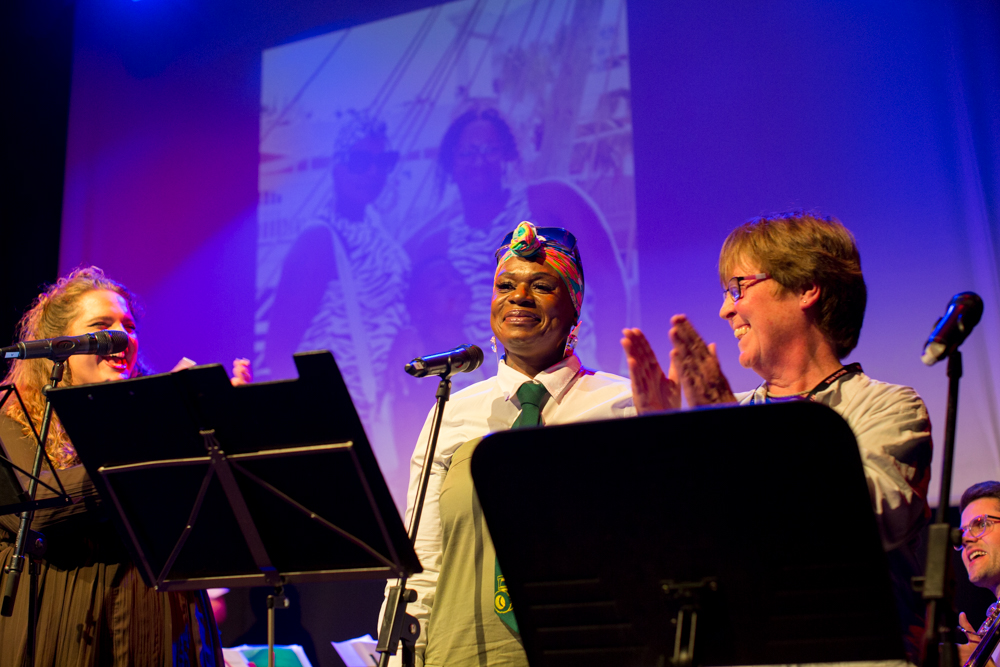
On the morning of November 27th, Lightbulb Trust hosted its annual breakfast with our partners, both longstanding and newly welcomed, at Megan’s on High Street Kensington. Despite grey skies and some transport chaos, the event immediately proved a lovely start to the day, full of warmth, laughter, and plenty of delicious pastries to make up for the soggy weather.

The breakfast kicked off with a welcome speech from Luisa, Lightbulb Trust’s Director, and a few words from Ben, Lightbulb Trust’s Co-founder and Trustee. They were delighted to introduce our new team members, Catia and Essia(/myself);  as well as our new Lightbulb Trust partners: Speek, TACO!, Tellmi, and Voda. And our Greenlight Project 2024 partners: Kakilang, Kinetika Bloco, Scene & Heard, and The Nucleo Project. These incredible organisations are already making significant inroads toward supporting their communities. We are excited to see what lies ahead for them and even more delighted to be a part of their journeys. It was a joy to welcome them into the Lightbulb Trust family.

The morning also included updates from Dr Jami Dixon and Ruth Sorby, Lightbulb Trust’s pro-bono advisors. Jami and Ruth spoke of the latest opportunities on offer around impact evaluation and fundraising advice. We also launched another iteration of the Integration Challenge, grants aimed at supporting collaboration amongst our partners. These initiatives are all designed to help our partners scale their work and deepen their impact.

We were delighted to have Barry from Open Up Music speak about his experience being part of the Match Trading pilot, an initiative to help partners diversify their income beyond traditional grants. For many, one of the highlights of the day was the captivating marionette showcase from our partner, Curious School of Puppetry. Their puppets sparked a playful energy to the room with partners and team members eagerly joining in on the fun and attempting to make the marionettes, perform amusing and fun dances. Well done to all brave volunteers, including our very own Trustee, Shuen Chan! From awkward wobbles to wildly spinning limbs, the puppet performances had everyone laughing, mesmerised, and bringing out their inner child.

Of course, what would an event be without socialising? It’s the best part! After the show, our partners had the opportunity to enjoy networking over coffee and shakshorizo eggs, exchanging ideas and building relationships that will help drive positive change in our communities. It was lovely to see so many passionate individuals sharing their experiences and learning from each other.

Despite the obstacles we faced thanks to wintry London being its usual moody self, the event managed to pull through and truly reflected the incredible work being done by our partners. We couldn’t have asked for a better end to the year!

I want to close this with a huge thank you to all our partners for making this event so special. A big shout-out to Catia for organising everything so smoothly, and to the rest of the team for making it all come together. We truly couldn’t have done it without you! 

We hope to see you all next year for another wonderful event—hopefully with fewer train delays and a little less rain!

Essia Zamzam

Youth Engagement Officer

The Lightbulb Trust

Filed Under: Uncategorized

5 things to consider if you’re interested in using creative evaluation methods

25 September, 2024 by Luisa Gockel

We had feedback from amazing partner organisations doing great things that they often struggle to capture learning and showcase their impacts using traditional evaluation methods like surveys. There are lots of different reasons for this. For example they can feel tedious and extractive, leading to disengagement or lack of interest. Then there are practical issues like literacy challenges and language barriers.  Sometimes traditional methods just aren’t appropriate.

So, in January 2024, Lightbulb Trust with support from Dr Jami Dixon and Dr Jen Dyer, launched a pilot project, supporting 5 organisations to test and embed creative evaluation methods, helping them get feedback and understand the difference they’re making.

Our support included:

  • An in-person workshop where we introduced and used creative methods such as maps, timelines and voting with sticky dots. We spent time exploring where, why and how they might want to use these methods.
  • Tailored one-to-one support to explore their specific contexts asking questions like: What do you want to learn? What data is needed? What methods might work? Who needs to be involved?
  • A final online workshop to share learning and reflections between the organisations and, of course, to evaluate the support.

Here are 5 things we learnt:

  • People often overestimate the resource requirements and complexity of using creative methods.  They don’t think they have the time, space or expertise for it, and it can put them off trying. Yet using creative methods doesn’t have to be complicated – voting using sticky dots for example can be a quick way to get real-time feedback.
  • You need to get the right people involved in designing the approach. For example, a mix of those who can make decisions within the organisation (to ensure things can happen) and those who work directly with their community (to ensure methods are relevant) is useful. It may be useful to involve anyone else who has an interest in the information generated, such as those involved in marketing or communications.
  • Learning from peers can spark ideas and build confidence. If you know other organisations who are using creative methods, it may be worth reaching out to them to see what they do.
  • Having a combination of group and 1-2-1 support offers a space for organisations to ask questions, reflect and apply to their own context. The flexibility of the 121 support meant that we could provide tailored guidance, building knowledge and confidence over time.
  • Don’t let perfect be the enemy of good. All evaluation methods have strengths and weaknesses, and it’s the same with creative methods. Some may work well the first time you use them, others you may need to tweak.  And it’s likely to take a bit of time for both your team collecting data and your community to get used to them. But don’t let this stop you trying.

Dr. Jami Dixon, Bright Impact
Dr. Jen Dyer, Nifty Sustainability

Filed Under: Uncategorized

Lightbulb is hiring an Admin Officer

5 June, 2024 by Luisa Gockel

Salary: £160 per day (£20 hourly rate)

Hours: 2-3 days per month (flexible hours, with the possibility of increasing the number of days worked)

Location: Remote (ideally based in West-London)

Deadline: 3rd July 2024

Starting date: 16th September 2024

About us

The Lightbulb Trust is a grant-making foundation that works with grassroots organisations and social enterprises supporting marginalised communities in West London and beyond. From local youth clubs to national initiatives, we support and connect inspirational organisations that are bringing about positive change and are contributing to social mobility.

The role 

We focus our grant-making activities in West London and encourage people who are based locally to apply. We will prioritise applicants with lived experience of the inequalities faced by the local community in West London.

We are looking for a freelancer who can provide admin support to the Trust. Your role will be diverse and dynamic – please find some of the key activities below:

  • Operations: Proactively identify opportunities to streamline processes and improve efficiency within the Trust. Help organise, save and keep good records of relevant meetings, grants, and impact investments
  • Communications: Updating information on the Trusts’ website and online presence, monitor the Trust’s email and inbound requests
  • Finance: Bookkeeping, organising invoices and payments, as well as supporting the preparation of the Trust annual accounts
  • Partner support: Support the Director in managing all grantees and partners, including drafting grant-letters, contracts, tracking impact reports, scheduling calls and visits, and matching partners with pro-bono support. Help with the preparation of 4-5 annual funding panels, including scheduling meetings and emailing applicants
  • Events: Help with the organisation of the Trust’s annual partner event in London and represent the Trust in relevant events when necessary
  • Governance: Support the preparation of the Trust’s annual impact report and Trustee meeting presentations and supporting papers, coordinating virtual trustee meeting schedules, drafting and distributing minutes

Skills

  • Exceptional communication and interpersonal skills, both written and verbal (English)
  • Proficiency in Microsoft Office Suite (Word, Excel, PowerPoint, Outlook) and Google Drive
  • Excellent organisational and time management skills, with the ability to prioritise tasks effectively
  • Basic bookkeeping skills would be helpful, but training will be given
  • Team player with exceptional ability to get things done remotely and independently
  • An interest in social impact and grant-making would be beneficial, but not essential

Equity, Diversity and Inclusion

We are committed to ensuring that marginalised communities have access to high-quality support in order to achieve their full potential. As part of our commitment to championing voices from across all communities, we acknowledge the barriers faced by people who have been impacted by poverty and experienced by women, LGBTQ+ people, disabled people and people from ethnic minority backgrounds. We actively encourage applicants from all sections of the community to champion and represent the voices we support both within and outside of our organisation. 

Accessibility 

If you need any adjustments made to the application process or have any questions regarding accessibility within the role, please do get in touch.

How to apply

Please send your CV and a short cover letter (no more than 150 words) to info@lightbulbtrust.org by the 3rd July 2024.

Filed Under: Uncategorized

The Power of Local Partnership

26 February, 2024 by Luisa Gockel

The Integration Challenge – West London Zone and Earls Court Youth Club

In summer term 2023, through the support of Lightbulb Trust’s Integration Challenge fund, West London Zone and Earls Court Youth Club came together to co-design and deliver an after-school programme, offering a range of opportunities to a group of local young people already enrolled on the West London Zone programme.

Together, West London Zone (WLZ) and Earls Court Youth Club (ECYC), came together to deliver a six-week pilot programme, referred to as their ‘Integration Challenge project’. This project saw WLZ Link Workers and staff take young people from two schools in South Kensington to the youth club, to take part in the club’s weekly junior session.

These sessions meant that young people on the WLZ programme had the opportunity to participate in a range of activities. These included playing football, arts-focused activities such as mosaic making and t-shirt making, as well as having access to the computers in the IT room, all of which provided them with the opportunity to socialise, learn, and be active. Table tennis was a big hit every week, led by the youth club’s wonderful staff members and trained youth workers.

Purpose of the project

The two desired outcomes of the project were to:

  • Support young people to make positive progress and build skills in confidence, teamwork, leadership and aiming high.
  • Enable young people to access the youth club beyond the length of the programme.

Upon its completion, WLZ’s Link Workers and the ECYC team remarked that increased confidence was the most noticeable outcome for the young people attending the sessions. As each week passed, they appeared more comfortable being away from their Link Worker and their school peers, engaging more with other adults and young people from other schools. Although difficult to measure, there is no doubt that by opening up access to the vital support and services Earl’s Court Youth Club are offering, and supporting these young people to build the right skills they need to thrive, such positive impacts were achieved for those young people identified as most likely to benefit from this partnership.

Additionally, four young people from the project continued to attend the Earl’s Court Youth Club as temporary members throughout the summer holiday programme, thanks to the generosity of the club in continuing to accommodating these WLZ young people.

The power of local partnerships

Both organisations are really pleased with these outcomes and believe it is testament to the power of local partnerships in how they approach the real needs of local young people. As two organisations embedded in the local communities they serve, West London Zone and Earl’s Court Youth Club recognise how important it is for practitioners to share resources and to collaborate to achieve positive outcomes. In this particular project, this spirit of collaboration was emphasised in the need to share different perspectives and compare nuanced understandings of the local context, as well as detailed knowledge of each young person’s background, strengths, goals, and areas for improvement. In doing so, the two teams worked together to best support each young person toward meeting their individual goals.

“The best thing I’ve done with West London Zone”

The feedback from the project was positive across the board, from WLZ Link Workers to the young people joining in the activities. 

“It was so good, the best thing I’ve done with West London Zone.”

“I loved it – the food is amazing.”

“I would go back every day.”

“I like it here, I enjoy T-shirt designing and I laughed a lot today, so I will give it 1000/10.”

“I think this youth club is very good because there are lots of options of things to do.” 

(young people on the WLZ programme)

“I thought the Integration Challenge project was a fantastic initiative. The children thoroughly enjoyed it, they were engaged by the activities on offer and felt that the staff members were warm and welcoming. Thank you Earl’s Court Youth Club!” (WLZ Link Worker)

“I thought the project was amazing, and the staff were very supportive of each child’s interests. I saw a real difference in the children with their confidence to do different activities, and even to engage with other children. The youth club staff created such a warm and safe space which was shown by a number of the children saying they wanted to go back every day!” (WLZ Link Worker)

Sinead Earl (WLZ Link Worker), Abdi Aden (ECYC Centre Manager), Sonia Bouclainville (Lightbulb Trust), and Amy Wilson (WLZ Link Worker)

The future looks promising for this local partnership

There are some clear successes that have come out of this Integration Challenge: the enjoyment young people got from attending the youth club, the skills they were able to develop, but also the strong relationship forged between two organisations, something that will continue into the future.

West London Zone’s Area Manager for Kensington and Chelsea, Becky Bryce, and the Earl’s Court Youth Club Manager, Abdi Aden, will discuss a way of ensuring young people on the WLZ programme are able to engage with the club in the future. They are also working together to connect each other with other providers in the local community, continuing to join up the system and champion each other in their respective objectives to improve services and outcomes for local children and young people.

Charly Pye, West London Zone

Registered charity number 1160947 Private Limited Company number 08991196

Filed Under: Uncategorized

Looking back at 2023 and ahead to 2024…

18 January, 2024 by Luisa Gockel

The photographs on the easels are striking: a girl reaches beguilingly out to the lens, pulling you in with her vivacious eyes as much as her hand; a young woman salutes the camera and stares pointedly sideways, military cap atop headscarf; a lad is suspended in mid-air, as he heads a ball hanging like a full moon; another boy perches on a wall in his shades, striking a cheeky Mod pose. 

These fantastic images adorned the Lightbulb annual breakfast during late November 2023. They brightened the room, just as our partners consistently brighten lives. More than thirty of these organisations’ leaders gathered at Megan’s in the High Street, in the heart of the borough of Kensington and Chelsea, the community that we serve with so much of our work. We all came together to share ideas, celebrate our common purpose, and break banana bread (any surplus food was delivered immediately afterwards to the food bank at Refettorio Felix in Earl’s Court).

The fine art portraits could have been taken by Misan Harriman but were in fact the work of West London kids, their subjects being their friends – all under the expert guidance of another famed photographer, Alison Jackson. These workshops, facilitated by Lightbulb’s support and in partnership with Young K&C, took place during the summer at Caxton Youth and Solidarity Sports (as they had previously at other Lightbulb partners, Design Museum, Earls Court Youth Club and Dalgarno Trust, among others). 

The portraiture captures brilliantly the incredible spark, bright exuberance, and sheer potential of these young people: kids – like countless others – who benefit regularly from the amazing programmes laid on by our wonderful partners (offerings such as Alison’s specialist workshops, which will culminate in an exhibition later this month at Cadogan Hall, no less). 

We are proud to have helped this past year so many brilliant practitioners provide people – young and old – with such opportunities to forge ahead, be it via safe and inspiring places to be, expert mentor support, or other means… all leading toward enhanced chances for these individuals to shine (excuse the obligatory Lightbulb pun).

Since our previous annual breakfast event in 2022 (yes, as you ask, it has become our favourite morning of the year), Lightbulb awarded thirteen grants from our Greenlight fund to the tune of £400,000 and twenty-one grants from Lightbulb totalling £585,000. 

We also, during 2023, made two impact investments to inspirational start-ups. Social enterprise investment has always been a driving element of Lightbulb, from the get-go, but often had to come second to grant-making. This is changing. Our investment arm has expanded, thanks to the expert help of new senior adviser Colman Chamberlain during the latter half of 2023. Having refined our processes with Colman, we want to be as transparent about them as possible. To that end, we recently laid out our investment strategy on the Lightbulb website.

We have of course greatly missed our brilliant Director, Luísa Gockel, the glowing filament of Lightbulb, during those recent months (though, as with everything we do, she too was behind this recent impact investment drive) – but rejoice also that Luísa welcomed her third child, Tiago, into the world! While Sonia Bouclainville has deputised superbly in Luísa’s absence, with Colman’s input, we of course look forward to welcoming Luísa back from maternity leave in due course later this year.

Other highlights of 2023 included our ramped-up pro bono offerings. We will always look for new ways to buttress the services and offerings we can provide our partners, to aid growth and enhance capacity. Our friends at Analysis Group continued to make huge differences to the processes of several key partners, remarkable organisations such as West London Zone, Football Beyond Borders, and The Shannon Trust (please check out the blog on the latter collab here).

Meanwhile, impact consultant Jami Dixon offered insightful support to multiple other partners via a range of webinars, drop-in calls, and also more tailored exchanges. Read more here about Jami’s transformative work with us and what is coming up from her (including in the next few weeks).

We remain incredibly grateful to Analysis Group and Jami for their fantastic support, as we do our trustees.

Lightbulb also enjoyed fostering further excellent collaborations between partners via our Integration Challenge. These team-ups remain consistently rewarding success stories, proving that two plus two sometimes really can equal five (and then some)! They included, toward the end of 2022, under the Greenlight umbrella, The Curious School of Puppetry working with Steppaz arts and dance school; and then, in West London on the Lightbulb side, Nova and Earls Court Youth Club both teaming up with West London Zone (read more about the former partnership here).

Lightbulb, in these sorts of ways, remains committed to supporting the network of brilliant charities with whom we partner with more than just grants. We want to prove more than the sum of our parts, to help change lives for the better. We are committed to adopting innovative methods wherever possible and continually hone our processes to make our funding as intentional, user-friendly, and meaningful as possible: for example, this past year, in consultation with partners and in accordance with our own theory of change, we recalibrated our application process. We owe it to those partners to remain nimble, self-critical, and open. Indeed, at the Breakfast event, we asked attendees to share insights and feedback beneath three blue-skies of Post-Its… ‘I wish’, ‘I wonder’ and ‘I hope’ (the responses were suitably thought-provoking). 

The fundraising landscape for charities remains as tough as ever. We have moved through Covid but its aftershocks rumble on, particularly in mental health. The cost of living keeps stinging. Political change and renewal may be in the air – this year, over four billion people will vote in elections worldwide, more than ever before – yet we all know that these touchstone challenges aren’t going away anytime soon. 

We will never rest on our laurels. During the past four years, we have paid out more than £2.3 million. Yet we try to help not just financially, as explained already. We want to be as mindful and proactive funders as possible simply so that our partners are enabled to do their best work. We are resolved to continue that mission this year (our fifth). With those inspiring photographs taken by young people of young people firmly in mind – photographers and subjects who all deserve the very best possible chances in life – we feel more determined than ever to keep trying our best. 

Salome & Ben Holden

Trustees & Co-founders, The Lightbulb Trust

Filed Under: Uncategorized

  • Page 1
  • Page 2
  • Page 3
  • Page 4
  • Go to Next Page »

Footer

info@lightbulbtrust.org
Copyright The Lightbulb Trust 2019
The Lightbulb Trust is a registered charity in England and Wales 1187551
Design by Supafrank
  • Home
  • Contact
  • Privacy Policy
  • Cookies