• Skip to main content
  • Skip to footer

Lightbulb Trust

Changing lives for the better

  • About
  • Charity Partners
  • Social Investments
  • Impact & Research
  • Greenlight Project
  • Blog

Luisa Gockel

Bringing North and South Together: Lessons from the Baraka x ECYC Partnership

23 April, 2026 by Luisa Gockel

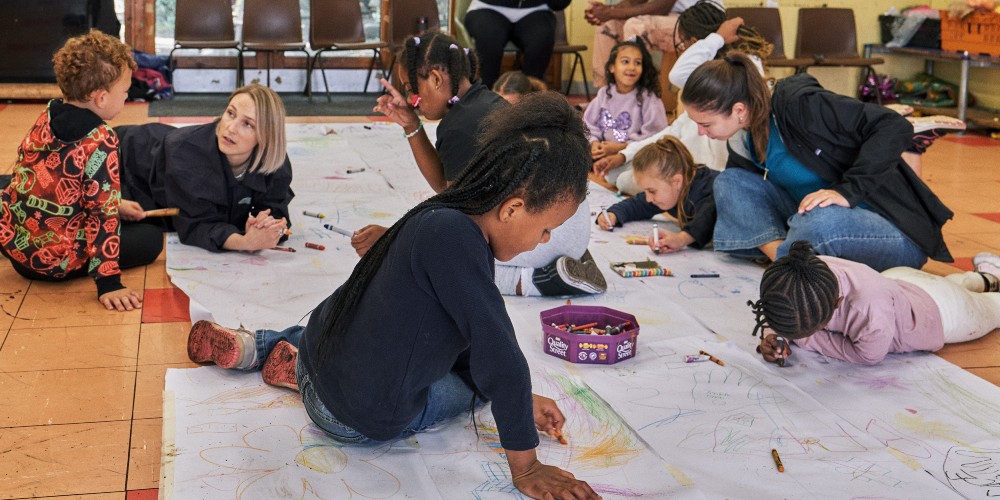
Educational inequality is not abstract for Baraka Community Association and Earls Court Youth Club (ECYC). It shows up daily in young people with potential but limited access to consistent support. While both organisations were already working to address this, support often operated in parallel rather than in sync.

Through its Integration Challenge, the Lightbulb Trust funded a small pilot grant to bring the two organisations together to test new ideas and ways of working. The aim is to create space for organisations to explore solutions collaboratively, rather than in isolation.

Baraka brought a structured supplementary education model, developed over five years, combining academic support with data tracking and personalised learning. ECYC brought nearly 50 years of youth club experience, trusted relationships, strong attendance, and a space where young people feel they belong.

Rather than replacing existing provision, the partnership focused on integration. Baraka’s model was introduced through training, adapted through co-delivery, and gradually embedded into ECYC’s setting. Young people could access more consistent academic support in an environment they already trusted, reducing barriers to participation and strengthening continuity in learning.

What started as a pilot has now grown into a cross-borough programme across Kensington and Chelsea, with the potential to reach more young people and deliver more sustained outcomes.

Key learnings:

1 – Alignment matters as much as provision
Both organisations were already supporting young people before this work began. The challenge was not the absence of provision, but the way it operated separately. Each brought different strengths, in structure, relationships, and delivery, but these were not previously connected. By aligning these strengths more intentionally, the overall offer became more consistent and effective. This raises a broader question for the sector: how many perceived gaps are actually gaps in coordination rather than provision?

2 – Partnership can strengthen practice without diluting purpose
Collaboration did not require either organisation to compromise its identity. Baraka remained focused on structured, data-informed academic support, while ECYC continued to provide a trusted, community-rooted environment. The value came from holding onto these distinct strengths and allowing something additional to develop between them. The result was a more rounded offer that neither could have delivered alone.

3 – Ownership drives sustainability
The shift from supported delivery to independent ownership was critical. Early stages of the partnership relied on shared delivery and guidance, but long-term value came when ECYC was able to embed and deliver the model itself. Building that ownership required time, space to adapt, and confidence through practice. Sustainable impact depends not on how well a model performs with external support, but on how confidently it can be delivered without it.

4 – Strong models can travel
A key insight from this work is that a well-developed model can extend beyond its original context. Baraka’s approach, built in the north of the borough, was able to take root within a different organisation and community in the south. This was not a simple replication but a process of adaptation and learning. It suggests that scaling impact may depend as much on transferring effective models as it does on growing individual organisations.

5 – Innovation is about how we work, not just what we deliver
In this case, innovation was not about creating a completely new programme. It was about how organisations worked together: sharing knowledge, testing approaches in practice, adapting in real time, and building something jointly over time. Many funding models focus on predefined outputs, but this kind of collaboration requires flexibility and space for iteration. If the goal is to unlock more effective, joined-up solutions, then funding needs to support not just programmes but also the process of developing them.

Ultimately, this partnership showed the value of alignment. By connecting structured learning with trusted relationships and strong community presence, it reduced fragmentation and created a more joined-up approach to supporting young people. It also demonstrated what can happen when organisations are given the space to work differently, with collaboration at the centre rather than the margins.

Written by Ahmed Nur, Director of Baraka Community Association, and Abdi Aden, Centre Manager at Earl’s Court Youth Club.

Filed Under: Uncategorized

Introducing Lightbulb’s second Impact Report (2024-5)

16 April, 2026 by Luisa Gockel

We are beyond proud to publish our official Lightbulb Impact Report for 2024-2025, thanks to the incredible efforts of Luisa and Catia. Our first impact report was a complex beast that sought to synthesise two years and several divergent strands of data into a single comprehensible framework – no mean feat! 

For this, our second report, we have sought to make things a bit simpler and include only those grants completed within the relevant financial year so that we could be snappier about our evaluation process and turnaround time for the next set of grant decisions. 

To share some key statistics from it:

  • We have made 21 grants and 3 impact investments this past year 
  • Working with a total of 24 organisations, 48% led by women, and 30% by people with lived experience, and/or from racialised communities
  • Totalling a grant/investment spend of £692,000 
  • Which has directly impacted over 11,000 people

The experience of producing both reports led us to reflect on several key elements: the different constituent parts of our organisational framework (Lightbulb alongside Greenlight, grants alongside investments, and our pro bono offerings) and how they fit together, as well as some core philosophical and ethical questions: What do we mean by ‘impact’ exactly? What key metrics or ‘results’ would these translate into? How granular do we want to be about measuring the impact of our grants, investments, and pro bono work across Lightbulb and Greenlight? At what point would our impact measurement reporting ‘requirements’ become burdensome to our grantees (pulling them into yet more ‘admin’ rather than their truly impactful frontline community work)? 

All of these musings, articulated through a brilliant Theory of Change session with Jami Dixon back in 2022 (‘What are we seeking to do with Lightbulb? How and why?’), plus some inspiring work with Colman Chamberlin in 2023 on sharpening our thinking around Impact Investments specifically, have translated into a light-touch impact measurement framework and system.  

Our current fantastic pro bono partners, Ruth Sorby and the Analysis Group team, alongside Jami Dixon, have been instrumental in further refining our framing of Lightbulb’s impact (as well as supporting and inspiring our partner organisations to do the same).

This involves – on our grants side – tracking topline data points (number of people impacted, unrestricted vs restricted funding, and diversity data), as well as asking our grantees to complete a simple questionnaire at the end of their grants (that checks whether our aims to ‘support under-represented leadership’, ‘enhance organisational capacity’, and ‘foster collaboration’, have actually landed). On the Investment side – a framework that we are still evolving – we track not only these metrics of ‘impact’ but also that of ‘financial return/profit’.

As a result of all this work, we feel in a grounded and positive place about how we measure what we are trying to do: Hopefully not too much admin and report writing (for either us or our partners), but also – hopefully – not too little. Our aim is to track ‘just enough’ to be thorough and responsible, while not depleting or compromising the most valuable use of anyone’s energies.

It’s been a privilege to be able to think through all of this – with such incredible colleagues and partners – from the inside out so that we can end up with a working system that feels truly congruent with our values and aims.

And so, in terms of the actual nuts and bolts of our impact in figures and feedback, I am delighted to leave you in the capable hands of our second Lightbulb Impact Report for 2024-5. Hopefully there’s just enough (but not too much) in there! As always, we are aware that the ‘impact’ in these pages is really all about our partners and their incredible work – and we truly hope that our report gives you a good flavour of that and of their incredible achievements this past year.

Salome Holden, Co-Founder

The Lightbulb Trust

Filed Under: Uncategorized

Sharing Layers of Practice

13 April, 2026 by Luisa Gockel

What we learned from our Integration Challenge collaboration

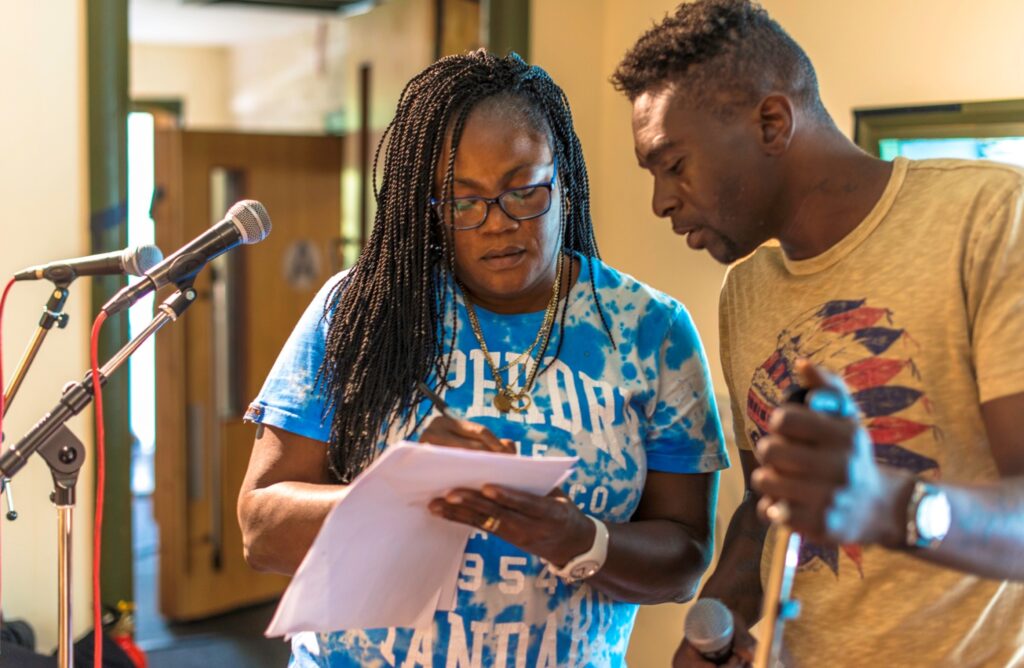
This year we, the Irene Taylor Trust (ITT) and Hear Me Out (HMO), took part in an Integration Challenge collaboration. Although our organisations have been connected for many years, this was the first time we were able to look closely at each other’s frontline music practice. ITT works in prisons and HMO works in immigration detention and asylum settings. Our contexts are very different, yet the values behind our work are closely aligned.

This project gave us the chance to step into each other’s spaces, learn from one another and reflect more deeply on our own approaches. We are sharing our learning here in the hope that it might inspire other organisations who are thinking about collaborating.

What the collaboration made possible:

Artists learning from artists

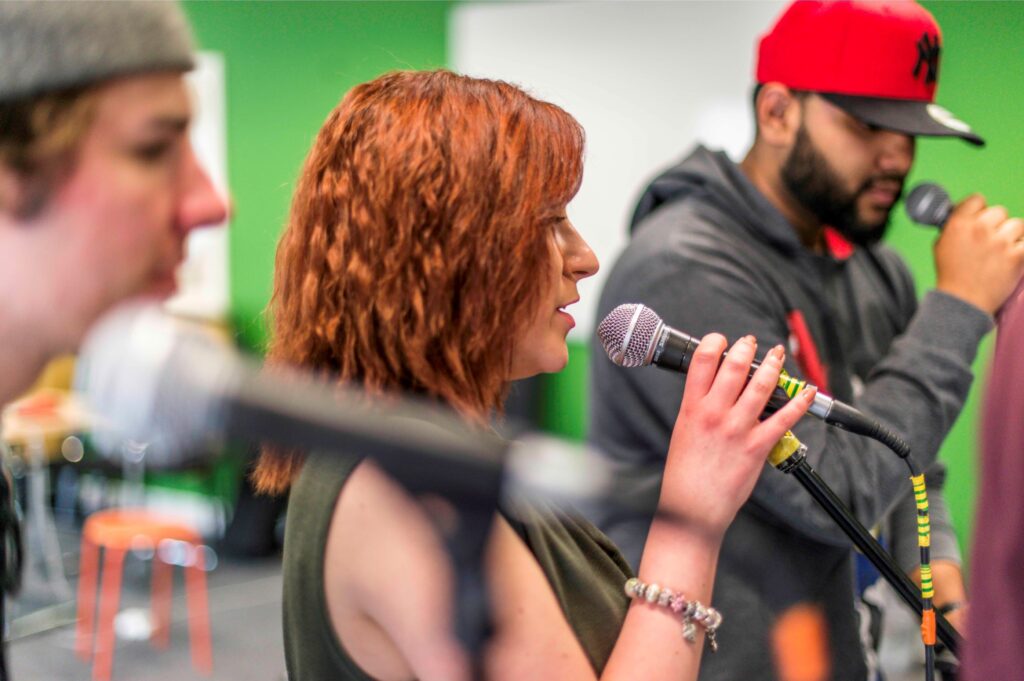
Our artists observed each other’s workshops and took time to reflect together. They recognised many shared experiences, particularly the need to work flexibly and respond in the moment. They also noticed key differences in how our sessions run. ITT often works with groups that stay together over time, which allows for song writing and one to one musical development. HMO sessions are shaped by more unpredictable attendance, which leads to more open music making and jamming. Seeing these contrasts helped all of us understand our own work more clearly and also identified  other ways we could work in our own groups.

Participants influencing future practice

We invited participants in both settings to share what mattered to them. In Napier Barracks, language barriers made it difficult to gather detailed insights, which is something we will plan for more carefully in future. Even with this challenge, participants spoke about how music increased confidence, created relaxation and offered moments of joy. In ITT’s Sounding Out project, participants talked about collaboration, creative freedom and the pride of making something from scratch. Their feedback reminded us how important it is to create spaces where people can express themselves freely, have agency over their current situations and build resilience for their futures.   

Sharing learning with the wider sector

We hosted a webinar for artists, educators, students and colleagues from across the sector. Many attendees told us the session encouraged them to reflect more intentionally on their own practice. Others said it helped them understand the realities of music making in prisons and detention. There was a strong interest in artist wellbeing and in the importance of reflective time, which is often overlooked.

What stood out for us:

Shared reflective practice is powerful

The project reinforced how important it is for artists to have time and space to think about their work, and to talk openly and share the challenges they face. It benefited us as individuals and strengthened our two organisations.

Language needs careful planning

In detention settings, language can be a barrier to collecting meaningful feedback. We will build better tools, prompts and interpreter support into future projects.

Face to face contact makes a difference

Much of this collaboration happened in person. Being physically present in each other’s spaces led to deeper conversations and stronger relationships.

Artist care must be resourced

Artists rarely have paid time to reflect. In this project they did, and they told us how valuable and restorative it felt. We want to find ways to build more of this into our ongoing practice to strengthen our respective sectors and ensure the vast knowledge our artists have is not lost as a result of burn out. 

What we hope happens next

This project gave us a simple but effective model for shared reflective practice, and we would like to explore ways to develop it further. With the right support, it could become something that other organisations use to learn from each other. We also hope to build more structured reflection time into our own programmes and to support artists to develop their reflective skills.

For any organisation thinking of applying for an Integration Challenge collaboration, our experience is that even a small project can create deep learning, build stronger relationships and shape practice in lasting ways.

Filed Under: Uncategorized

Lightbulb is hiring a Operations & Admin Officer in London

21 January, 2026 by Luisa Gockel

Salary: £160 per day

Hours: 3 days per week (flexible hours, with the possibility of increasing the number of days worked)

Location: London-based, with flexible working arrangements

Deadline: 20th February

Starting date: 16th March

About us

The Lightbulb Trust is a grant-making foundation that works with grassroots organisations and social enterprises supporting marginalised communities in West London and across the UK. From local youth clubs to national initiatives, we support and connect inspirational organisations that are bringing about positive change and are contributing to social mobility.

About you

We are looking for a highly organised, proactive and thoughtful individual who enjoys supporting a grant-making foundation to run smoothly and effectively. You will have experience working in a foundation, charity or other mission-driven organisation, and be comfortable juggling a broad range of responsibilities across operations, finance, communications, and partner support.

You will be someone who takes pride in good systems and clear records, spots opportunities to improve processes, and is confident working independently while staying closely connected to the Director. You will be reliable, detail-oriented and warm in your approach, able to communicate clearly with grantees, trustees and external stakeholders, and motivated by supporting organisations doing meaningful social impact work.

Please find a list of desirable skills below:

  • Exceptional communication and interpersonal skills, both written and verbal
  • Proficiency in Microsoft Office Suite (Word, Excel, PowerPoint, Outlook) and GoogleDrive
  • Excellent organisational and time management skills, with the ability to prioritise tasks effectively
  • Basic bookkeeping skills would be helpful, but training will be given
  • Team player with exceptional ability to get things done remotely and independently
  • CRM experience
  • An interest in social impact and grant-making would be a plus

The role 

We are looking for an experienced administrator with at least five years’ experience who can provide administrative and operational support to the Trust. The role is varied and dynamic. We focus our grant-making activities in West London and encourage people who are based locally to apply.

Some of the key activities include:

  • Partner support: Support the Director in managing all grantees and partners, including drafting grant letters, contracts, tracking impact reports, scheduling calls and visits, and matching partners with pro bono support. Help with the preparation of 4-5 annual funding panels, including reviewing applications, scheduling meetings and emailing applicants.
  • Finance: Bookkeeping, organising invoices and payments, and supporting the preparation of the Trust annual accounts and audits.
  • Operations: Proactively identify opportunities to streamline processes and improve efficiency within the Trust, including leading on research and CRM migration. Help organise, save, and maintain accurate records of relevant meetings, grants, and impact investments.
  • Events: Help with the organisation of the Trust’s annual partner event in London and represent the Trust in relevant events (around 2-3/month).
  • Governance: Support the preparation of the Trust’s annual impact report and Trustee meeting presentations and supporting papers.
  • Communications: Updating information on the Trusts’ website and online presence, monitoring the Trust’s email and inbound requests.

Equity, Diversity and Inclusion:

As part of our commitment to championing voices from across all communities, we acknowledge the barriers faced by people who have been impacted by poverty and experienced by women, LGBTQ+ people, disabled people and people from racialised communities. We actively encourage applicants from all sections of the community to champion and represent the voices we support through our work. 

We focus our grant-making activities in West London and encourage people who are based locally to apply. We will prioritise applicants with lived experience of the inequalities faced by the local community in West London. 

Accessibility 

If you need any adjustments made to the application process or have any questions regarding accessibility within the role, please do get in touch.

How to apply

Please send your CV and a short cover letter (no more than 100 words) to info@lightbulbtrust.org by the 20th February 2026. Please explain why you are interested in the role and in working with The Lightbulb Trust. We are a place-based funder and will not consider applications from candidates who are not currently based in London.

We value thoughtful use of technology and AI, but we are most interested in hearing your genuine voice. You do not need to meet every requirement listed above. What matters most is your work ethic, willingness to learn and motivation to contribute to meaningful social impact.

Filed Under: Uncategorized

What Five Years as a Funder Has Taught Me

21 October, 2025 by Luisa Gockel

This year marks five years since I joined the Lightbulb Trust. We are a small grant-making foundation and impact investor, but we have never let size limit our ambition.

Looking back, I have had the privilege of sitting across from remarkable founders, charity leaders, activists and policy thinkers. Each one has shaped how I understand power, purpose, and the messy, human way that change really happens.

Here are ten lessons I keep coming back to, my own unofficial guide to funding a little better.

1. Change needs roots…

We’re a place-based funder with a focus on West London. Our work is grounded in long-term relationships, deep listening, and the belief that proximity leads to better decisions. We believe in local interventions because we see the difference they make, up close and every day. A trusted adult in a school, a warm meal at a community hub, a creative outlet after school. These are the kinds of initiatives that bring stability and hope, especially where the system has failed repeatedly. 

2. …but it also needs rockets

No matter how brilliant a local intervention is, it can only go so far if the system that creates the need for it remains unchanged. That’s why we also make impact investments, backing early-stage, tech-based startups that have the potential to reshape systems in education, mental health and employment. The real magic happens when these two strands meet: when the deep understanding and trust built on the ground connect with the reach and momentum of system-focused ventures. I believe that’s where lasting change begins.

3. Proximity is power

The most transformative ideas come from leaders who are closest to the problem, people rooted in the communities they serve. But proximity should not stop there. As a small funder, staying close to those leaders matters just as much. You learn more from a quick text or call than from a long application form. All 50 of our active partners have my personal number and know they can reach me if they need to. It is not a model for everyone, but for me, that closeness builds trust and understanding.

4. Are you really a proactive funder?

For some funders, invitation-only can feel not inclusive enough, which is why many prefer to call their approach proactive. For us, being truly proactive means putting in the hours of research needed to find the right partners, rather than waiting for them to find us.

Having been a fundraiser myself, I feel strongly about this. We only invite those we already believe are a strong fit, so before they sit down to write a single line of their application, they know their time is valued, and that their chances of being funded are very high. Some funders boast about receiving hundreds of applications with a 10% success rate. To me, that’s a failure of design. There are many ways to fix it, such as offering open office hours for eligibility questions or clearly stating success rates. Small changes like these make funding more transparent and humane.

5. Our charity leaders are burning out

I’ve lost count of how many brilliant leaders have told me they feel exhausted, alone, or one funding cycle away from quitting. Before asking for another quarterly report or impact matrix, ask when they last took a proper break. Their wellbeing is the work, especially in small charities, where one person often holds everything together.

6. Keep an eye on your female leaders

Too many women in leadership roles carry the weight quietly. Structural sexism and racism often mean they feel they can’t show vulnerability or ask for help. It’s not uncommon for a charity leader to break down in tears when we start talking about funding or some of the challenges they face. They hold so much for others, often with little space or support for themselves. If they’ve been quiet for too long, check in.

7. A seat at the table

If funders want diverse and representative leaders and teams, they need to be part of decision-making too, including on your board. We recently began the process of seeking Charity Commission permission to pay our trustees, prompted by conversations with brilliant candidates who bring both lived and professional experience. Again and again, we heard the same thing: I can’t afford to do this unpaid. The system makes it hard to change who gets a seat at the table, and it shows. According to the Charity Commission’s own findings, trustees still don’t reflect the communities charities serve, with most being older, white and highly educated.

8. If you want better data, build it together

Metrics should help your partners learn and improve, not just justify their work to you. The best learning comes from honest conversations, but if something about a partner’s approach to measurement isn’t working, find ways to support them to build that capacity. Many small charities don’t have dedicated monitoring & evaluation teams, so we offer pro bono support and connect partners with an impact measurement expert who helps them strengthen their approach and tell their story with more confidence. A little help can make a big difference. 

9. Fund the innovation you ask for

Funders love to say they want charity partners to be innovative, but then forget to actually fund it. If you want people to experiment, you need to give them the financial room to try, test and even fail. Build it on top of your core grant, not instead of it. We run an ongoing fund for exactly this. It gives our partners the permission and incentive to take risks that could lead to something better. Funders should stop saying they want innovation until they are ready to pay for it.

10. The value of ‘learning out loud’ 

One thing I’m still learning: don’t wait until you feel completely ready before sharing what you know. There’s a lot of value in learning out loud and sharing what we’re unsure about, what’s working, and what isn’t. It creates space for connection and reminds others they don’t need to have it all figured out either. We’re all learning, all the time.

What ties it all together

I love trust-based philanthropy, but I believe that should be the baseline, not the end goal. Trust is where we start, not where we stop. The real work is to make philanthropy human-centred. We need to see the people behind the proposals, to listen before measuring, and to recognise that care and connection are not extras, but essentials for lasting impact.

Luisa Gockel, Director at the Lightbulb Trust

Filed Under: Uncategorized

Launching the UK’s First Workertech Impact Investment Fund

21 October, 2025 by Luisa Gockel

15 September 2025 by Louise Marston

Building on five years of proven impact, we’re launching the UK’s first dedicated investment fund for technology that improves low-paid work

We’re really proud to be announcing the first close of the UK’s first Workertech impact investment fund today—a £9m fund to support innovation and technology improving work for those in low pay.

The Ventures activities of the Resolution Foundation were set up to address some key issues affecting work:

  • Good work is vital to living standards – it affects our financial position, but also mental and physical health
  • Access to widespread good work requires more than policy change – as important as that is. It needs people and employers to change and be supported to do things differently.
  • Those using technology to transform work and employment tend to focus on higher-paid jobs, desk-based and knowledge work, and benefits to employers, often neglecting the bottom half of earners and the impact on workers.
  • The nature of startups and early-stage investments means that there are well-known biases in who gets to found companies and who gets to invest in them.

We wanted to create a fund that prioritised positive social impact, that welcomed founders from all backgrounds, and that could seek out great ideas that could benefit workers as well as having a strong business model.

Proven impact at scale

Over the last five years, we’ve demonstrated that this approach works. Our portfolio of Workertech investments has reached over 358,000 workers, with more than 20,000 actively using our portfolio companies’ services to improve their working lives. Most importantly, over 5,600 workers have experienced transformational changes in their pay, prospects, power, or wellbeing—proving that purpose-driven technology can create meaningful change.

Our first portfolio exit last year—Breakroom’s acquisition by U.S. platform ZipRecruiter—showed that worker-focused ventures can build sustainable businesses while creating lasting social impact.

Our focus is clear:

We invest in companies that use technology and data to enhance working lives across four key areas:

Better Pay: Supporting innovations that increase income through job moves, promotions, successful campaigns for higher wages, or offer higher pay standards compared to industry practices.

Improved Prospects: Backing platforms that help workers complete training, acquire new skills, secure work in sectors with better progression opportunities, or access more secure working hours.

Greater Power: Investing in solutions that improve workers’ ability to take individual or collective action, create channels for worker voice, and help secure positive changes from employers or policy makers.

Enhanced Wellbeing: Supporting technologies that offer better working conditions, provide support for excluded or disadvantaged groups, and reduce negative impacts on physical and mental health.

We know that these ventures exist, and are excited to bring our existing portfolio into the new fund. You can find out more about them and the impact they’ve created to date in our most recent impact report.

Building an inclusive ecosystem

We’re proud that 50% of our portfolio founders are women and 25% are from BAME backgrounds—demonstrating our commitment to supporting diverse entrepreneurs who understand the challenges facing low-paid workers. Through pre-investment grants, mentoring, and flexible funding structures (including quasi-equity for cooperatives and social enterprises), we’re creating pathways for those with lived experience of these issues to lead solutions.

A coalition for change

This fund represents more than capital—it’s backed by a leading coalition of mission-aligned investors including Resolution Trust, Joseph Rowntree Foundation, Ufi VocTech Trust, and Friends Provident Foundation. Together, we’re demonstrating that strategic investment can drive meaningful social progress while maintaining financial sustainability.

Looking ahead

With the new fund, we’re targeting 50 investments over five years, focusing on pre-seed and seed stage companies with the potential to reach hundreds of thousands of UK workers. Each investment is measured against agreed impact objectives, ensuring transparency and accountability to our charitable mission.

This has been a long journey, and there are a lot of people who have supported this idea (and me!) along the way that need to be thanked—and not all of whom can be named here. But I have to mention Gavin Kelly, former executive chair of the Resolution Foundation (now chief executive of the Nuffield Foundation), who created this area of work, recruited me, and has supported it every step of the way. This is his vision as much as anyone’s. Huge thanks also go to the Foundation’s board of Trustees, who have been hugely patient and supportive of this endeavour, as well as all of our investors.

As the Foundation comes up to its 20th anniversary this year, this feels like a great milestone to celebrate, as well as a marker of things to come.

To learn more about Resolution Ventures and the Workertech Fund, please contact Louise Marston, Director of Ventures, at louise.marston@resolutionfoundation.org.

Filed Under: Uncategorized

Not Just Making Tea: Five Lessons from Working in Social Impact

21 February, 2025 by Luisa Gockel

Growing up in West London, I’ve seen first-hand the challenges young people face—whether it’s struggling with access to opportunities, mental health support, or simply being heard.  Taking on the role of Youth Engagement Officer at Lightbulb Trust has been an eye-opening experience, showing me the behind-the-scenes work that supports our incredible partners and how social impact and impact investing work can create real change. Here are five key lessons I’ve learned so far:

1. Youth voices matter more than we think

As young people, we feel like our opinions aren’t taken seriously, and we’re often told that we are still too young to understand anything about the ‘real world’ but working in this role has shown me the complete opposite. Our perspectives are valuable. More than people can imagine it. Whether it’s suggesting ideas, facing challenges, or making engagement more inclusive, having a youth voice in decision-making is crucial. Many of our partners support young people, but to truly make an impact, they need to hear directly from us.

As someone who has grown up in West London and who has attended youth clubs, navigated the education system, and experienced inequalities, I know firsthand how important it is to have someone who just gets it. This ensures that young people’s needs are met. One thing I was told growing up by my teachers and mentors is that lived experience cannot be taught, and sometimes our voices are more valuable than experience, so don’t be afraid to speak up and go for opportunities. You don’t need to have it all figured out, sometimes, just taking the first step can lead to the best opportunities.

2. Challenges around remote working 

When I started working remotely, I thought it’d be a piece of cake. I would just have to open my laptop and work whenever I want to, especially after surviving online school during COVID. But I had it completely wrong. While it is true that I pretty much have things in my hands, balancing remote work with university can be challenging. 

For the first time, I’m fully independent. Managing my own workload, deadlines and schedule has been a challenge. I’ve had to reorganise my timings at least ten times, figuring out what works and what doesn’t. But thankfully, I have amazing colleagues who have helped me immensely, making the process much more comfortable and manageable.

3. It’s okay to make mistakes!

I’ve learned that you can’t expect yourself to know everything, especially when stepping into a sector you aren’t familiar with, and that’s completely okay. After all, where’s the fun in knowing everything from the start? The real thrill lies in exploring and trying new and unexpected things along your journey. As James Joyce puts it, “Mistakes are the portals of discovery.” Life is about embracing new experiences, stepping outside of your comfort zone and most importantly, trusting and believing in yourself. 

The great thing about working in social impact is that everyone understands that learning is part of the process. Mistakes happen, but what matters is being open to feedback and growing from them. Each challenge is an opportunity to refine your skills, build resilience, and develop a deeper understanding of the work you’re doing. And remember this is your life, and you are the one leading it so don’t be afraid to dive into new opportunities and take ownership of your path. 

4. Not just giving

Before joining Lightbulb Trust, I didn’t fully understand what went into funding and supporting grassroots organisations. Over time, I’ve learned that social impact is about much more than just providing financial support, it requires strong partnerships, ongoing communication and a willingness to learn. 

One of the biggest lessons I’ve learned is that communication is key. At Lightbulb Trust, we make sure to treat our partners in a way that fosters real partnership, not just as organisations receiving funding. Social impact comes from building relationships, understanding their challenges, and celebrating their successes. We care about the improvements our partners are making and stay engaged to see their impact firsthand. And it takes a lot of time and work.

At the same time, we also recognise that we aren’t perfect and that there is always room for improvement. We learn and listen from our partners in order to grow and improve. Real social impact isn’t just about giving, it’s also about adapting, listening and working as one big team to create meaningful change.  

5. Digital engagement is a powerful tool for change

During my first few months managing website updates and social media I have learned how important digital platforms are and how they shape engagement. I have observed how our partners use their social media platforms to express their voices. Social media isn’t just about content and mindless scrolling, it’s a tool for impact. When used correctly, amazing things happen. It’s a way to amplify voices, mobilise communities, and share knowledge. 

At Lightbulb, I have the exciting opportunity, and great responsibility, of managing our social media. While social media can be a place where I unwind and enjoy funny videos or catch up with my favourite influencers, I have come to understand it as something far more powerful. It’s a platform for change, where movements are born, awareness is raised and conversations spark action. 

Growing up, I often heard my mum blame everything on social media “It’s because of that phone!” was a constant refrain. Technology seemed like the scapegoat for every problem. If you’re a parent, you’ve probably said it too. But while phones may seem like the issue, they’re not all bad. Social media isn’t just for passive consumption; it’s a tool for connection, learning, and advocacy across generations. What was once seen as a distraction can be a force for good, helping us shape the future. Learning to navigate it thoughtfully has been one of my most valuable lessons. 

Moving forward

This experience has reinforced my passion for social impact and community-driven change. There’s still so much to learn, but I’m excited to keep growing, developing new skills, and making a meaningful contribution to this work. Young people have so much to offer, and I hope to continue ensuring that our voices are heard and valued.

Essia Zamzam

Youth Engagement Officer

The Lightbulb Trust

Filed Under: Uncategorized

Lightbulb Trust’s Partner Breakfast 2024

18 December, 2024 by Luisa Gockel

On the morning of November 27th, Lightbulb Trust hosted its annual breakfast with our partners, both longstanding and newly welcomed, at Megan’s on High Street Kensington. Despite grey skies and some transport chaos, the event immediately proved a lovely start to the day, full of warmth, laughter, and plenty of delicious pastries to make up for the soggy weather.

The breakfast kicked off with a welcome speech from Luisa, Lightbulb Trust’s Director, and a few words from Ben, Lightbulb Trust’s Co-founder and Trustee. They were delighted to introduce our new team members, Catia and Essia(/myself);  as well as our new Lightbulb Trust partners: Speek, TACO!, Tellmi, and Voda. And our Greenlight Project 2024 partners: Kakilang, Kinetika Bloco, Scene & Heard, and The Nucleo Project. These incredible organisations are already making significant inroads toward supporting their communities. We are excited to see what lies ahead for them and even more delighted to be a part of their journeys. It was a joy to welcome them into the Lightbulb Trust family.

The morning also included updates from Dr Jami Dixon and Ruth Sorby, Lightbulb Trust’s pro-bono advisors. Jami and Ruth spoke of the latest opportunities on offer around impact evaluation and fundraising advice. We also launched another iteration of the Integration Challenge, grants aimed at supporting collaboration amongst our partners. These initiatives are all designed to help our partners scale their work and deepen their impact.

We were delighted to have Barry from Open Up Music speak about his experience being part of the Match Trading pilot, an initiative to help partners diversify their income beyond traditional grants. For many, one of the highlights of the day was the captivating marionette showcase from our partner, Curious School of Puppetry. Their puppets sparked a playful energy to the room with partners and team members eagerly joining in on the fun and attempting to make the marionettes, perform amusing and fun dances. Well done to all brave volunteers, including our very own Trustee, Shuen Chan! From awkward wobbles to wildly spinning limbs, the puppet performances had everyone laughing, mesmerised, and bringing out their inner child.

Of course, what would an event be without socialising? It’s the best part! After the show, our partners had the opportunity to enjoy networking over coffee and shakshorizo eggs, exchanging ideas and building relationships that will help drive positive change in our communities. It was lovely to see so many passionate individuals sharing their experiences and learning from each other.

Despite the obstacles we faced thanks to wintry London being its usual moody self, the event managed to pull through and truly reflected the incredible work being done by our partners. We couldn’t have asked for a better end to the year!

I want to close this with a huge thank you to all our partners for making this event so special. A big shout-out to Catia for organising everything so smoothly, and to the rest of the team for making it all come together. We truly couldn’t have done it without you! 

We hope to see you all next year for another wonderful event—hopefully with fewer train delays and a little less rain!

Essia Zamzam

Youth Engagement Officer

The Lightbulb Trust

Filed Under: Uncategorized

  • Page 1
  • Page 2
  • Page 3
  • Page 4
  • Go to Next Page »

Footer

info@lightbulbtrust.org
Copyright The Lightbulb Trust 2019
The Lightbulb Trust is a registered charity in England and Wales 1187551
Design by Supafrank
  • Home
  • Contact
  • Privacy Policy
  • Cookies